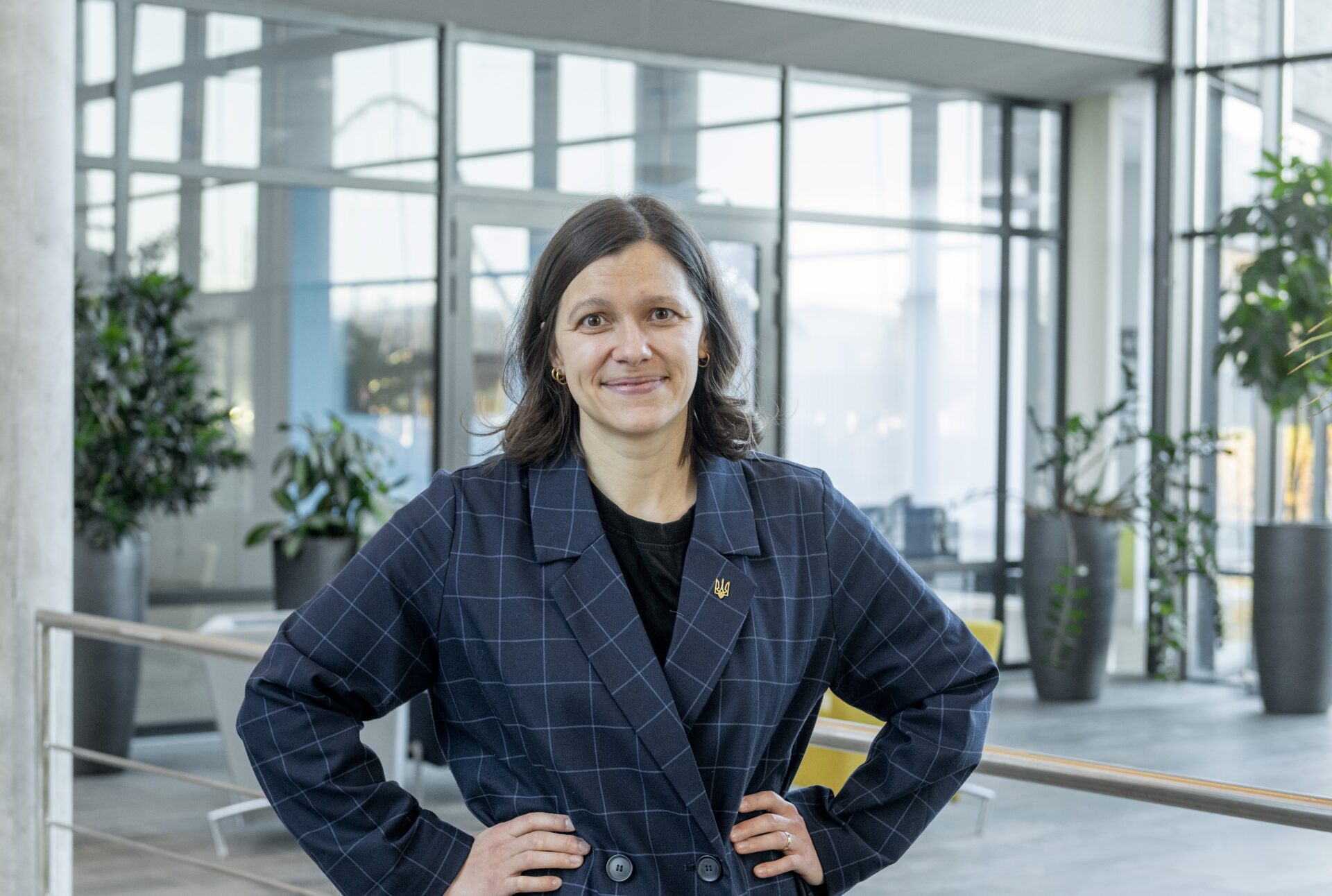
Valeriia Kalienkova
Valeriia Kalienkova is a researcher at the Department of Biomedicine. She has a keen interest in the mechanisms of membrane transport and membrane excitability, as well as the mechanistic aspects of membrane protein function. She obtained her PhD from the University of Zurich and has subsequently worked as a postdoctoral researcher at the University of Groningen and the University of Bergen. Kalienkova employs structural biology (cryo-electron microscopy, X-ray crystallography) and biochemical methods to understand how membrane proteins function in health and disease.
In the TMF Starting Grant project PhysiolASIC, Kalienkova will study acid-sensing ion channels, known as ASICs. These are small ‘gates’ in the cell membrane of nerve cells that respond when the environment around the cells becomes more acidic. When the channels are activated, they allow sodium ions to enter the cell and can thus influence electrical signaling in the nervous system. ASIC channels are linked, amongst other things, to pain processing, memory and learning, and they are also associated with serious medical conditions such as neurodegeneration, damage following ischemic stroke and glioblastoma.
Although ASIC channels stand out as promising yet underexplored pharmacological targets, our understanding of how they function in their natural environment remains limited. A key challenge is that these channels exist in several variants and can form both simple and complex channel assemblies with different properties. At the same time, membrane proteins are often influenced by the lipids surrounding them and by other proteins with which they interact. To date, little is known about endogenous interaction networks of ASICs. To develop more precise tools and potential treatments, it is essential to understand ASIC channel function in living tissue, not merely as isolated proteins in the laboratory.
The aim of PhysiolASIC is to characterise ASIC channels in their physiological context. Kalienkova will develop new ASIC-specific protein binders, including nanobody-based tools and novel binders designed using computational methods. These will be used to extract native ASIC complexes from brain tissue, whilst preserving the lipid environment and interacting proteins. The complexes will then be analysed using techniques such as cryo-EM, mass spectrometry and functional measurements to understand how the native ASIC channels are organised, and how they can be modulated.
Media links
- uib.noUiB artikkel om TMF Starting Grant 2025