Growing Together: A New PhD Community at the Centre for Mountains in Transitions
When the new Centre for Mountains in Transitions (CMT) began its work in September 2025, it did so with an unusual idea at the heart of its organisation: bring together a group of twelve PhD candidates from different disciplines and let them embark on their research journeys at roughly the same time.Led by geologist Jostein Bakke from the University of Bergen’s Department of Earth Science, the centre explores mountains through the interconnected perspectives of snow, glaciers, landscapes and people. But interdisciplinary research can be easier to promise than to practise. What happens when young researchers actually have to work across the boundaries between their fields?
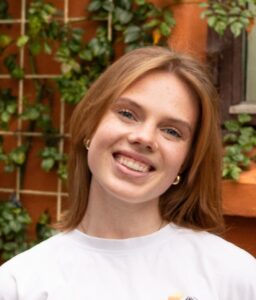
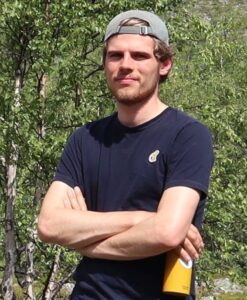
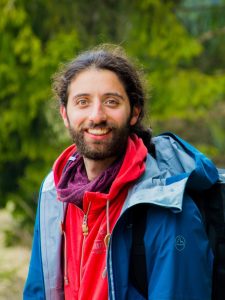
We met three of the centre’s PhD candidates to find out: Ida, a biologist from Bergen; Jesse, a geologist from the Netherlands; and Paolo, a meteorologist from Italy.
Different backgrounds, shared curiosity
All three were attracted by the centre’s interdisciplinary approach and found research topics that matched their own interests. For Ida, the first introduction to CMT even came through her mother, who spotted a newspaper article announcing the new centre and sent it to her. One feature of the PhD positions particularly appealed to the three researchers: their projects offer both direction and freedom. The overall research topic is defined, but the PhD candidates have considerable scope to decide which methods and approaches they want to use.That freedom is coupled with something they have come to value just as highly: easy access to researchers outside their own disciplines. The threshold for asking for help is low. Jesse has already experienced the benefits during fieldwork. On several trips, he has brought along colleagues with little previous experience of his particular field. Rather than being a disadvantage, their unfamiliarity has proved useful. They ask different questions, notice different things and prompt him to think about his research in new ways. Paolo, meanwhile, is preparing to join another colleague on Folgefonna to retrieve instruments before the first snow arrives. These collaborations are also making it easier for the PhD candidates to seek advice beyond their formal supervisory teams. If a problem calls for expertise from another discipline, approaching another supervisor at the centre no longer feels like such a big step.
Learning to speak across disciplines
Interdisciplinary research comes with challenges, of course. A biologist, geologist and meteorologist may all study the same mountain landscape, but they do not necessarily describe it in the same language.The PhD candidates therefore make a conscious effort to avoid unnecessary jargon and explain their work in ways colleagues from other fields can understand. That takes time. A PhD is demanding enough when trying to master your own discipline. Understanding several others within the relatively short span of a three-year doctoral project is even more ambitious. Still, simply having colleagues around who think differently can change the questions a researcher asks. And the benefits of belonging to a cohort extend beyond science.
Making the PhD less lonely
Doctoral research can be intense and, at times, lonely. The CMT fellows are trying to counter that by building a community from the outset. They meet for lunch every week and have begun organising activities outside work, including dinners, running and game nights. Their academic backgrounds may be different, but many of the uncertainties they face as early-career researchers are remarkably similar. Ida admits that this sense of community did not emerge immediately. When the candidates first arrived at the centre, everyone was preoccupied with developing work plans and getting their individual projects underway. There was little time or mental space to understand what everyone else was doing. Now, she feels this is beginning to change. People are increasingly able to lift their eyes from their own projects and become curious about the research happening around them. And that may be where some of the centre’s most interesting interdisciplinary work begins.
From mountain research to mountain communities
The ambition is not only to create connections between academic disciplines. The young researchers are also thinking about how their work can connect with society. They have already presented their work at Rosendalsveko. Meeting the centre’s stakeholder forum, which includes representatives from municipalities in Western Norway and suppliers for renewable power, has also given them a clearer sense of how mountain research can matter to local communities. For Paolo, encouraging people to care about mountains may begin with something very simple: curiosity. Pay attention to the natural world around you, he suggests. Try to understand how it works and how it is changing. From understanding may come the desire to protect it. It is a fitting idea for a research centre built around mountains in transition. Its young researchers are setting out to understand changing snow, glaciers and landscapes. At the same time, they are learning how to understand one another. For the PhD candidates, the experiment in interdisciplinary research has only just begun. But perhaps one of its most valuable lessons is already becoming clear: sometimes the person who asks the most useful question is the one who sees your mountain from a completely different perspective.
All photos courtesy of: CMT/UiB


